Gum Surgery
There may be many reasons for why a person may seek out gum surgery an...

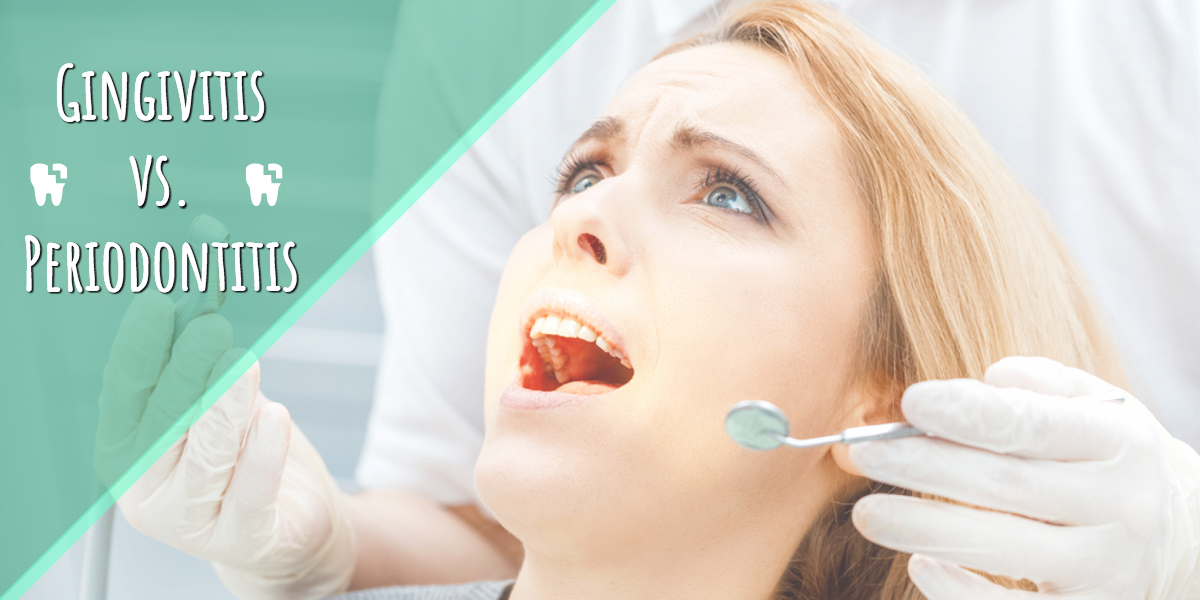
Gingivitis and periodontitis are two gum conditions that can often be confused with one another. These oral infections can often be prevented and are easily treated, when a patient is able to recognize symptoms early and go to the dentist.
Gingivitis is often the first stage of gum disease and it later progresses into the more severe periodontitis, when not treated in time. The illnesses are inherently connected with one another, however they exhibit different symptoms. Here are some tips to tell the difference between the two gum diseases.
Gingivitis is commonly referred to as gum inflammation. It normally occurs when plaque builds up inside your mouth and around the teeth.
When you do not maintain routine oral hygiene habits, plaque can stay and harden around your teeth and gums. This makes your gums irritated over time, and can eventually lead to them becoming inflamed.
When gums are inflamed, they separate slightly from the teeth. This is why, in late stages of gingivitis, a patient will notice that their teeth become loose. When the gums move away from the teeth, they allow bacteria to move into the spaces they once protected. This means that bacteria can grow under your gums, closer to the root of your teeth.
As the bacteria in these plaque deposits evolve, they cause inflammation and bleeding of gums. You will notice this when brushing your teeth. Although your gums may feel irritated or swollen.
If early Gingivitis is left untreated, it may proceed to evolve to Periodontitis. The two diseases are interrelated and Periodontitis is the more progressed form of Gingivitis.
Be aware of the symptoms of gingivitis and come into the dentist as soon as you notice any changes in your oral health. Gingivitis is easily treated when caught early.
Gingivitis, generally called gum disease starts with bacterial growth in the mouth. If this bacterial growth isn’t treated right away, it may keep advancing and ultimately result in tooth loss due to the obliteration of tissue surrounding the teeth.
While it can be difficult to notice the gradual signs of gingivitis, periodontitis is something a patient will not be able to ignore. This is the stage where bacteria start to pull away from the gum and bone surrounding your teeth.
Periodontitis is a serious gum infection and can cause tooth loss of not treated properly. It is very common because often times, its earlier stages, gingivitis, can go unnoticed for long periods of time.
They form small pockets where debris from food and plaque keeps on depositing and it continues to go in deeper below the gum line. Toxins produced by the plaque keep breaking down the connective tissues that hold the teeth in place. Resultantly, the teeth are no longer anchored in their roots and tooth-loss can occur.
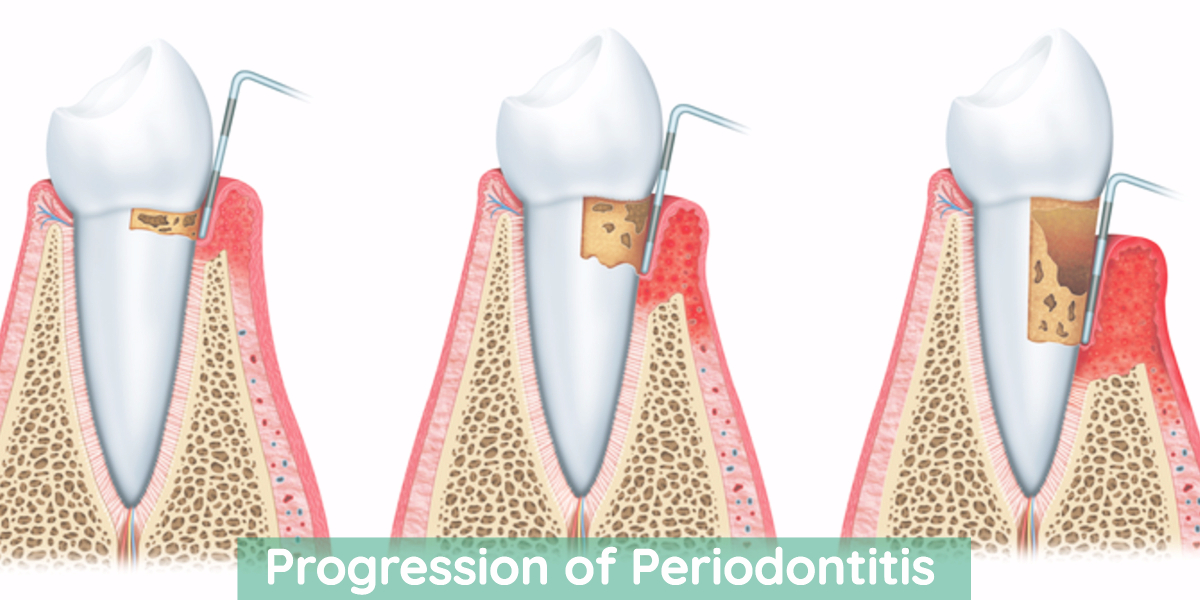
Once gingivitis progresses to the stage of periodontitis, the patient is strongly advised to visit a dentist immediately, in order to avoid tooth loss. Periodontitis can be treated and when treated in the early stages the patient can avoid the process of needing extraction and dental implants.
Your dentist will perform a more in-depth version of general scaling, to manually remove plaques that have formed deeply under the gums. A surgery may be needed in order to pull the gums away from the teeth, to reach the plaque deposits at the root. This procedure is a more advanced version of a deep cleaning, but it is very similar. It may be all a patient needs to remove existing bacteria.
If the gum tissue is severely infected, your dentist will prescribe antibiotics. Once the infection has cleared, your mouth will be assessed and you may be in need of bone and tissue grafts to replace infected areas that cannot fully heal. This can be needed if the jaw bone has been infected, in severely progressed cases.
If the gums are heavily inflamed and visibly pulling away from the teeth, a surgery will be performed. During gum flap surgery, plaques and buildup are removed along with the pockets of bacteria around the teeth. The excess gum tissue that has become loose is removed and the remaining gum tissue is stitched up, so that the gums will again, hug the teeth.
Both gingivitis and periodontal disease can be referred to as gum disease for ease of reference. The scary thing about gum disease is that it progresses painlessly and silently. If proper oral care is not practiced it may take you a few months to go from teeth to no-teeth. Symptoms of gum disease include any of the symptoms of periodontal disease and gingivitis. The most common and widely recognized symptoms of both include:
Even if you don’t show any symptoms of gum diseases, chances are you may still have them to a minimum degree.
Periodontal disease causing gum recession
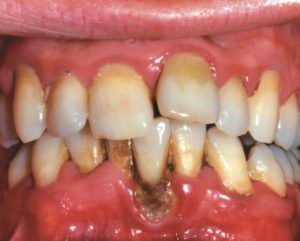
Periodontal disease due to plaque buildup and bad occlusion
Poor oral hygiene is not always necessarily the cause of gum disease. Plaque is considered as the greatest and one of the most common reasons leading to gum diseases. However, there are numerous other reasons which might lead to Gingivitis or even Periodontal Diseases:
Almost 70% of people living in the United States have early signs of gingivitis or gum inflammation and they barely notice. It is therefore very important to stay vigilant about the condition of your gums, teeth, and mouth. These gum diseases can be prevented with a little bit of care and dedication to oral health care:
If you are in pain or notice something increasingly wrong with the state of your oral hygiene, it is best to visit your dentist.
Of course, it is advisable to visit a dentist at least twice a year to promote general oral health, however, if you notice something wrong with your teeth outside of these treatments, book with your dentist immediately. You may be in need of antibiotics or surgery. It is essential to visit your dentist at the earliest symptoms of discomfort.
Contact LA Dental Clinic if you are experiencing any discomfort or notice anything different about the condition of your oral health. We are a full-service dental agency and would be happy to assist you with your dental needs.

LA Dental Clinic
3377 Wilshire Blvd #202
Los Angeles, CA, 90010
